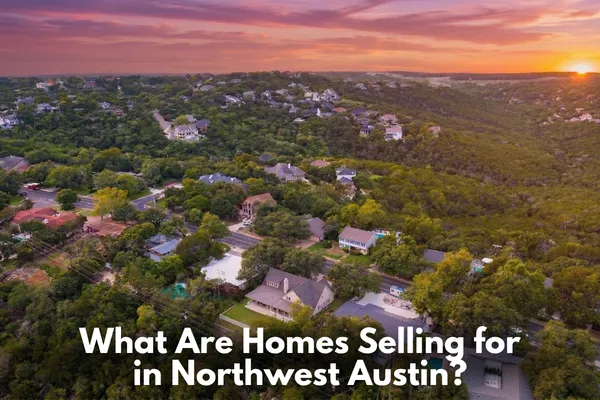
What Are Homes Selling for in Northwest Austin?
If you’re thinking about buying or selling in Northwest Austin, one of the first questions is:
👉 “What are homes actually selling for right now?”
The short answer:
👉 Home prices in Northwest Austin vary widely depending on the neighborhood, condition, and exact location, but demand remains strong, especially in areas near top schools and central access points.
Let’s break it down in a way that actually helps.
What Affects Home Prices in Northwest Austin?
Before looking at numbers, it’s important to understand not all Northwest Austin homes are comparable.
Prices are driven by:
neighborhood
school zoning (especially Westwood High School)
level of updates
lot size and location
proximity to The Domain and The Arboretum
Typical Price Ranges by Area
While prices shift with the market, here’s a general way to think about it.
Barrington Oaks, Oak Forest, Anderson Mill
Westwood High School Area
Often one of the most in-demand segments
Typical range:
mid-range homes (original condition)
updated homes commanding higher prices
strong competition depending on inventory
Buyers here are often prioritizing schools + location
Living in Barrington Oaks and Oak Forest
Northwest Hills and Great Hills
Primarily Anderson High School, Some Westwood High School Area
More central + often larger homes/lots
Typical range:
wide variation depending on updates
higher price points for remodeled homes
premium for location and lot
Spicewood / Balcones / Bull Creek
Westwood High School Area
More space + larger lots
Typical range:
varies significantly based on home size and condition
some homes priced higher due to lot size and setting
What “Price Per Square Foot” Doesn’t Tell You
A common mistake is focusing on price per square foot.
But in Northwest Austin that number can be misleading
Because:
remodeled homes skew averages
lot value plays a big role
micro-location matters
What Homes Are Actually Selling For (Reality)
In many cases:
updated homes = premium pricing
well-located homes = faster sales
school-zoned homes = consistent demand
And two similar homes can sell very differently based on updates and presentation
What Sellers Need to Know
If you’re thinking about selling pricing correctly matters more than ever
Key factors:
how updated your home is
how it compares to recent sales
how it’s positioned in the market
Overpricing can slow things down
Strategic pricing can create momentum
What Buyers Need to Know
If you’re buying be prepared for variation
You may see:
older homes needing updates
remodeled homes priced significantly higher
competitive situations in certain pockets
A Real-World Perspective
In Northwest Austin homes don’t just sell based on size
They sell based on:
location within the neighborhood
school zoning
condition and updates
A Better Way to Think About Pricing
Instead of asking:
“What are homes selling for in Northwest Austin?”
Ask:
What are homes like the one I’m buying or selling actually selling for in this specific neighborhood?
That’s where real clarity comes from.
Final Thoughts
Home prices in Northwest Austin are influenced by:
neighborhood
schools
condition
location
It’s a highly desirable area, which keeps demand steady, but pricing is never one-size-fits-all.
More helpful resources:
Is Northwest Austin a Good Place to Live
Best Neighborhoods in Northwest Austin
Frequently Asked Questions
Are home prices high in Northwest Austin?
They vary, but demand is strong due to location and schools.
Do homes sell quickly in this area?
In many cases, yes, especially if priced correctly.
Are updated homes worth more?
Yes, significantly in many cases.
Is the Westwood High School area more expensive?
Often, yes, due to consistent demand.
