Should You Sell Your Northwest Austin Home Before the Repairs Pile Up?
If you have owned your Northwest Austin home for years or decades, you probably know the feeling.
Something small needs attention.
Then something else.
Then another thing.
The fence leans. The HVAC gets older. The roof is not new anymore. The trees need trimming. The exterior paint starts showing wear. A faucet drips. A window sticks. The yard takes more effort. The deck needs work. The water heater is aging. The flooring looks tired. The kitchen and bathrooms feel dated.
Individually, none of these may feel urgent.
Together, they start to feel heavy.
That is when some longtime homeowners begin asking a very real question:
Should I sell before the repairs pile up even more?
The answer is not automatically yes.
But it is a smart question.
Because one of the biggest mistakes longtime homeowners make is waiting until the home becomes harder, more expensive, and more stressful to sell.
What Sellers in Northwest Austin Should Not Over-Improve Before Listing
Why repairs pile up in longtime homes
Most homes do not become overwhelming all at once.
It happens gradually.
You fix the urgent things. You postpone the optional things. You get used to the quirks. You stop seeing certain issues because they have been there so long. You tell yourself you will handle the project next year.
That is normal.
But homes keep aging whether you are planning for it or not.
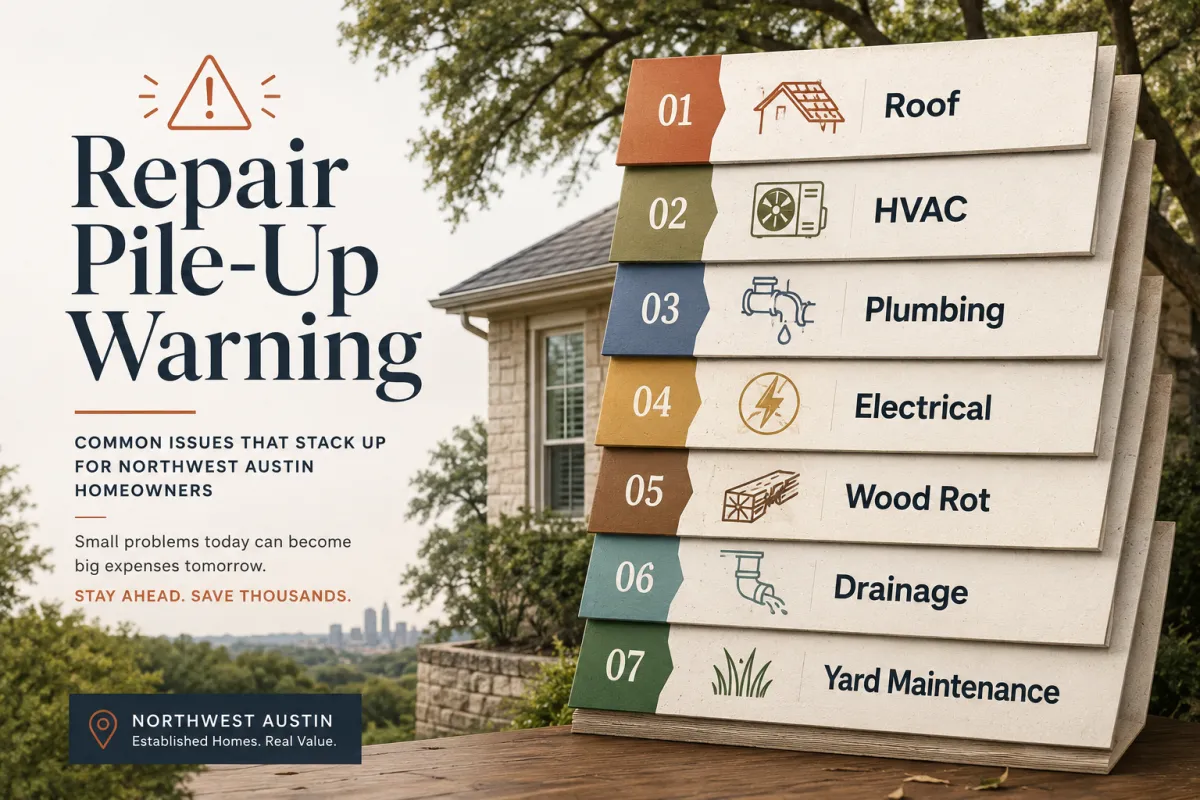
Over time, you may be dealing with:
roof age
HVAC age
water heater age
plumbing concerns
electrical updates
exterior paint
wood rot
drainage issues
tree maintenance
fence repairs
flooring wear
window issues
outdated kitchens and bathrooms
landscaping that takes more effort than it used to
The problem is not one repair.
The problem is the stack.
Northwest Austin homes can still have strong value even when they need work
This is important.
If your Northwest Austin home needs repairs, that does not mean it is a bad home.
It may still have major strengths:
mature trees
established neighborhood
desirable location
lot size
proximity to The Domain, Apple, Arboretum, Gateway, 183, MoPac, Parmer, or 620
school or neighborhood appeal
renovation potential
long-term ownership history
a floorplan buyers can work with
Many buyers are willing to take on updates if the location and price make sense.
But the more the repairs pile up, the more the buyer pool can narrow.
That is the key.
What Buyers Regret After Moving to Northwest Austin
The difference between “dated” and “deferred”
Buyers can often handle dated.
Dated means:
older cabinets
original bathrooms
older tile
dated fixtures
worn but usable finishes
an older floorplan
cosmetic updates needed
Deferred is different.
Deferred means:
visible wood rot
active leaks
major systems at end of life
failing HVAC
roof concerns
drainage problems
neglected exterior maintenance
safety issues
signs of water intrusion
damaged flooring from long-term wear
yard or tree issues that feel unmanaged
A dated home can feel like an opportunity.
A deferred home can feel like risk.
If you are starting to move from dated into deferred, that is when the timing conversation becomes more important.
Why waiting can shrink your options
Selling before repairs pile up is not about panic-selling.
It is about preserving choices.
When the home is still manageable, you may have options:
do light prep and sell traditionally
make a few strategic repairs
price with condition in mind
buy first, then sell
sell first and rent temporarily
take time to sort belongings
choose the next home carefully
sell as-is with a stronger buyer pool
When repairs become more serious, options may shrink.
You may feel forced to:
sell as-is at a deeper discount
negotiate heavily after inspection
deal with more buyer hesitation
accept fewer financing options
spend money under pressure
make rushed decisions
move before you are emotionally ready
ask family to step in quickly
The earlier you plan, the more control you usually have.
What Is the Best Order of Steps for Downsizing From a Longtime Home?
The repair pile affects buyer confidence
Buyers do not evaluate repairs one item at a time.
They interpret the whole picture.
A buyer may see:
old roof
old HVAC
overgrown trees
dated kitchen
worn flooring
exterior wood rot
drainage concerns
deferred paint
leaky fixtures
And think:
“What else has not been maintained?”
That is the danger.
Some repairs are manageable. But when the list gets too long, buyers start worrying about hidden issues.
A long repair pile can make the home feel riskier than it may actually be.
Inspection negotiations can get harder
Older homes often produce longer inspection reports.
That is normal.
But if the home already shows visible deferred maintenance, the inspection can become a bigger negotiation problem.
Buyers may ask for:
repair credits
price reductions
licensed repairs
further inspections
roof evaluations
HVAC service or replacement
plumbing or electrical work
foundation evaluation
drainage repairs
A buyer who loved the home during the showing may feel differently once the inspection report confirms their concerns.
The more repair issues are visible up front, the more likely the buyer will either discount the home heavily or negotiate aggressively.
What People Don’t Know About Downsizing in Northwest Austin
The cost of repairs can increase over time
Some repairs get more expensive when delayed.
Examples:
small roof leaks becoming drywall and insulation damage
poor drainage affecting foundation or landscaping
wood rot spreading
small plumbing leaks damaging cabinets or flooring
tree limbs damaging roof or gutters
neglected HVAC leading to emergency replacement
exterior paint failure leading to siding or trim damage
Waiting is not always cheaper.
Sometimes waiting turns a repair into a project.
That does not mean every issue needs to be fixed immediately. It means you should know which issues are likely to become more expensive if ignored.
Repairs are not only financial - they are emotional
This part matters, especially for longtime homeowners.
At some point, the home can start to feel like a to-do list instead of a place of peace.
You may feel:
guilty for not keeping up
embarrassed by the condition
tired of calling contractors
frustrated by recurring projects
unsure which repairs matter
overwhelmed by the cost
reluctant to have people over
anxious every time something breaks
That emotional weight is real.
If the house is taking more energy than it gives back, that is part of the decision.
When selling before repairs pile up may make sense
Selling sooner may be worth considering if:
repairs are getting postponed regularly
the yard or trees are becoming too much
major systems are aging at the same time
you no longer want to manage contractors
you are using only part of the house
you are thinking about downsizing anyway
family is starting to express concern
the home still has strong value, but condition is starting to slip
you want to sell while you still have control
the cost of future repairs no longer feels worth it
This is not about running away from maintenance.
It is about recognizing when the home no longer fits the stage of life you are in.
What If Your Northwest Austin Home Needs Too Much Work to Sell?
When you may be better off staying and repairing
Selling is not always the answer.
Staying may make sense if:
you still love the home
the layout works well
repairs are manageable
you have the budget and desire to maintain it
the home supports your daily life
you are not emotionally ready to move
moving would create more stress than it solves
you can age in place with reasonable updates
the neighborhood and location still feel ideal
In that case, the better plan may be a maintenance roadmap.
Prioritize repairs by urgency, safety, cost, and long-term impact.
Staying can be wise if it is intentional.
The problem is staying by default while the repair pile grows.
The “repair threshold” question
Here is a useful way to think about it.
Ask yourself:
If I were buying this home today, how much work would I think it needs?
Then ask:
Would I want to take that on at this stage of life?
If the honest answer is no, it may be time to evaluate selling before the list gets longer.
Another helpful question:
Am I maintaining the home because I want to stay, or am I staying because I do not want to deal with moving?
Those are very different things.
Which repairs matter most before deciding to sell?
If you are considering selling, focus first on the repairs that most affect buyer confidence.
Roof
A roof concern can quickly become a major buyer issue. You do not always need to replace it, but you should understand its condition.
HVAC
In Austin, HVAC age and performance matter. A working older system is different from a failing system. Service records can help.
Water intrusion
Leaks, stains, drainage issues, and moisture concerns are major confidence killers.
Electrical
Obvious electrical issues, unsafe wiring, non-working outlets, or questionable DIY work can worry buyers.
Plumbing
Leaks, slow drains, water heater age, and visible corrosion should be evaluated.
Exterior maintenance
Wood rot, peeling paint, damaged siding, and neglected trim can make a home look more deferred than it may be.
Trees and drainage
Mature Northwest Austin trees are a benefit, but neglected limbs, roots, drainage, or slope issues can become concerns.
Should you fix repairs before selling or price around them?
It depends.
Use this framework.
Fix it if:
it is a safety issue
it is relatively inexpensive
it improves buyer confidence
it helps the home photograph better
it removes a major objection
it prevents obvious inspection drama
it makes the home feel cared for
Price around it if:
it is expensive
buyers may prefer to handle it themselves
the home is being sold as an update opportunity
the repair does not clearly improve net proceeds
the issue is obvious and can be reflected in value
Disclose it if:
it is a known material issue
you are not fixing it
it affects the property condition
buyers need to know about it
Fix, price, disclose.
That simple framework keeps sellers from overspending or ignoring the wrong things.
Northwest Austin vs Cedar Park for Buyers Who Want More Trees, Character, and an Established Feel
Why a pre-listing consultation can help
Before you spend money, get perspective.
A good pre-listing consultation can help you decide:
which repairs matter
which repairs are unnecessary
what buyers will likely notice
how the home compares with active competition
whether selling as-is makes sense
whether light prep is enough
how to price based on condition
whether a pre-listing inspection is worth considering
what timeline gives you the most flexibility
This is especially helpful for older Northwest Austin homes because the value may not be obvious from condition alone.
A home can be dated and still valuable.
A home can be updated and still limited by layout, street, or lot.
The strategy needs to match the actual property.
What if you cannot afford the repairs?
This is common.
Not every homeowner has the cash, time, or energy to repair everything before selling.
That does not mean you are stuck.
Options may include:
selling as-is
doing only low-cost high-impact prep
getting repair estimates for buyer transparency
pricing based on condition
negotiating credits instead of doing work
focusing on cleaning, decluttering, and presentation
targeting buyers who want renovation potential
A home that needs repairs can still sell.
The key is honesty and correct pricing.
What if you are embarrassed by the condition?
A lot of longtime homeowners are.
They may avoid calling anyone because they do not want someone to see the house.
But the longer they wait, the harder the process can become.
Here is the truth: Realtors, contractors, organizers, inspectors, and move professionals see homes in all kinds of conditions.
A house needing work is not a personal failure.
It is a property condition that needs a plan.
The sooner you get good guidance, the less overwhelming it usually feels.
Why this matters for downsizers
For downsizers, repair timing is often part of a bigger life question.
If the home is too large, too much to maintain, too expensive to repair, or no longer aligned with your daily life, then pouring money into it may not make sense.
Before making major repairs, ask:
Do I want to live here for another 5 to 10 years?
Will this repair improve my life if I stay?
Or am I repairing a home I already know I need to leave?
Would this money be better used for the next home?
Am I delaying the real decision?
If you are likely to move soon, be careful about large repair projects that do not improve the sale enough to justify the cost.
What adult children should understand
Adult children often notice repair issues before parents are ready to talk about them.
They may worry about:
safety
stairs
yard work
deferred maintenance
falling property condition
emergency repairs
parents being overwhelmed
But pushing too hard can backfire.
A better conversation is:
“What parts of the house feel like too much right now?”
Not:
“You need to sell.”
Parents may need time to connect the repair burden with the bigger question of whether the home still fits.
Support works better than pressure.
What Happens If Your Adult Children Disagree About Selling the Family Home?
The risk of waiting for “one more good year”
Many homeowners say:
“Let’s just get one more year out of it.”
Sometimes that is fine.
But if you say that every year while the home continues to age, the decision can become more reactive.
One more year may bring:
another major repair
more deferred maintenance
more physical exhaustion
more clutter
higher prep costs
more family pressure
fewer easy options
The goal is not to rush.
The goal is to avoid waiting until the home makes the decision for you.
A simple self-check
If you are not sure whether the repairs are becoming too much, ask yourself:
Am I postponing repairs because I do not want to deal with them?
Are multiple major systems aging at once?
Is the yard more burden than joy?
Do I feel embarrassed by parts of the home?
Are repair costs starting to feel like throwing money backward?
Would I buy this same home today?
Do I still want to maintain this property 5 years from now?
Are family members starting to worry?
Is the home helping me live better, or taking energy from me?
If several answers make you uncomfortable, it may be time to explore options.
Not necessarily sell tomorrow.
But explore.
How sellers can prepare without overcommitting
If you are thinking about selling but not ready yet, start with light preparation.
You can:
declutter one room at a time
gather repair records
get roof or HVAC information
clean up landscaping gradually
fix small nuisance items
get a market value estimate
understand your next-home options
review tax and financial questions
talk with family
create a repair priority list
This gives you control.
Even if you decide to stay, the work is useful.
The common mistake homeowners make
The biggest mistake is waiting until everything feels urgent.
That is when decisions get expensive.
When you wait too long:
repairs cost more
the home may show worse
buyers may negotiate harder
family may feel pressure
you may have fewer timing options
the move may become more stressful
the house may feel like a burden instead of a choice
The better time to evaluate selling is often before the home becomes overwhelming.
Downsizing Checklist for Seniors in Austin
My practical take
If your Northwest Austin home still works for your life and you are willing to maintain it, staying can make sense.
But if the repair list keeps growing, the house feels heavier each year, and you are already thinking about downsizing or simplifying, it may be smart to sell before the repairs pile up further.
Not because the home is bad.
Because timing matters.
Selling while the home still has strong buyer appeal and manageable condition usually gives you more options than waiting until every system and surface needs attention.
Final thought
You do not need to sell just because your home needs repairs.
Every home needs repairs.
But if the repairs are stacking up, your energy for maintaining the home is fading, and the house no longer supports the life you want, it may be time to look at the decision differently.
The question is not:
“Can I keep fixing this home?”
Maybe you can.
The better question is:
“Do I still want to?”
That answer matters.
FAQ
Should I sell my Northwest Austin home before repairs pile up?
Maybe. If repairs are becoming frequent, expensive, stressful, or connected to a larger desire to downsize, selling before the home becomes harder to maintain may give you more options and a stronger position.
Does a home need to be fully repaired before selling?
No. Many homes sell with dated finishes or needed repairs. The key is deciding what to fix, what to price around, and what to disclose honestly.
What repairs matter most before selling?
Roof, HVAC, plumbing, electrical, water intrusion, drainage, wood rot, safety issues, and exterior maintenance usually matter more than purely cosmetic updates.
Is it better to sell as-is if the repairs are too much?
It can be. Selling as-is may make sense if repairs would be too expensive, stressful, or unlikely to improve net proceeds. But the home should still be cleaned, decluttered, and priced properly.
How do I know if my home has become too much to maintain?
If repairs are being postponed, the yard feels overwhelming, major systems are aging, you feel anxious about what will break next, or you no longer want to manage the property, it may be time to evaluate your options.
Should I talk with a Realtor before making repairs?
Yes. Before spending money, get a realistic view of what buyers will value, what the home may be worth as-is, and which repairs are likely to improve your net outcome.
